


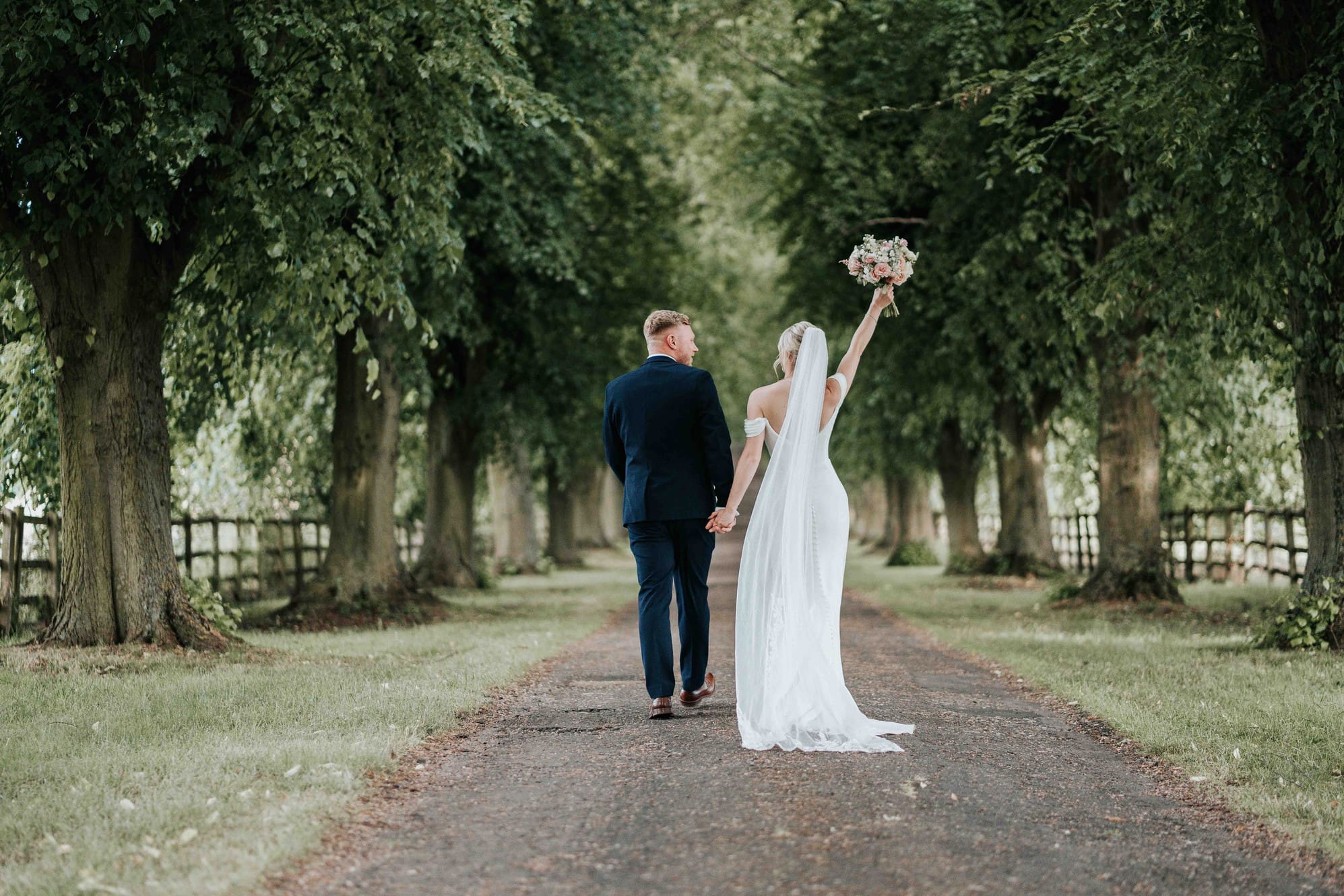
Editorial vs Candid Wedding Photography: What Is the Difference?
You want the photos that make you stop scrolling.
The beautifully composed portrait with incredible light. The one where everything just works.
But you also want the photo of your best friend losing it during the speeches. Your partner’s face when you walk into the ceremony. The hug happening behind you that you never even saw.
So when you start looking at wedding photography styles, you eventually run into the same question:
Editorial or candid?
The good news? You probably do not need to pick a side.
At Honey I Do, we love photography that feels intentional without making your wedding feel like an all-day photoshoot. Sometimes that means stepping in and creating the frame. Sometimes it means getting out of the way before we ruin a perfectly good moment.
Knowing which one to do—and when—is the important part.
Why Trust Honey I Do on Editorial and Candid Wedding Photography?
Honey I Do is a wedding photography and videography team.
That changes how we think about moments.
A wedding does not pause while the photographer gets a shot and then replay itself for video. Your first look happens once. The laugh happens once. That expression on your dad’s face during the ceremony? Definitely once.
Our photography and video coverage work from the same story.
We care about beautiful, intentional portraits. We also care about movement, reactions, voices, atmosphere and everything happening slightly outside the obvious frame.
Basically, we want you to have the photos that belong on the wall and the moments that take you straight back into the room.
Quick Answer: Editorial vs Candid Wedding Photography
Editorial wedding photography is more intentionally directed and composed. Candid wedding photography focuses more on real moments, interactions and reactions as they naturally unfold.
With editorial images, your photographer may choose the light, adjust your position, use architecture intentionally or guide your movement.
With candid images, the photographer is usually watching, anticipating and responding rather than controlling what happens.
But this is not an either/or situation.
A wedding has moments that benefit from direction and moments that should be left completely alone.
Editorial vs Candid Wedding Photography at a Glance
| Editorial Wedding Photography | Candid Wedding Photography | |
| Photographer involvement | More direction | Less direction |
| Main focus | Composition and intention | Emotion and interaction |
| Feel | Polished, artistic, deliberate | Natural, energetic, spontaneous |
| Posing | Often gently directed | Minimal or none |
| Light | Often chosen intentionally | Photographer adapts to what is happening |
| Architecture | Frequently part of the composition | Usually secondary to the moment |
| Best suited to | Couple portraits, details, fashion, architecture | Ceremony, reactions, speeches, cocktail hour, dancing |
| Couple experience | More guidance | More freedom to simply be present |
| Biggest strength | Visually striking images | Emotionally revealing moments |
| Best wedding galleries | Usually combine both | Usually combine both |
The biggest difference is not simply how the finished image looks.
It is how much the photographer influences what is happening while making it.
What Is Candid Wedding Photography?
Candid wedding photography is about paying attention.
You are not performing for us. Your guests are not being told to laugh. The emotion does not need to be recreated because we were already watching when it happened.
Think about your partner catching your eye during the ceremony.
Your mom fixing something on your outfit without realizing we are photographing her.
Your friends halfway through a story at cocktail hour.
Someone absolutely committing to the dance floor approximately three songs earlier than everyone else.
Those moments do not need to be manufactured.
They need to be noticed.
What Candid Wedding Photos Actually Look Like
Candid wedding photos usually involve:
- real expressions
- natural movement
- people interacting with each other rather than the camera
- laughter that actually happened
- emotional reactions
- imperfect little moments
- people moving through the space naturally
- the in-between pieces of the day
Candid does not mean careless.
A strong candid photograph still involves timing, composition, light and anticipating what is about to happen.
The difference is that we are solving those problems around the moment instead of stopping the moment to solve them.
Is Candid Wedding Photography the Same as Documentary Photography?
Sometimes people use candid, documentary and photojournalistic wedding photography as though they mean exactly the same thing.
Photographers do not always use those labels consistently.
A stricter documentary approach generally means very little intervention. The photographer observes the event and allows it to unfold without directing people.
Candid photography can work that way too.
But candid-looking photographs can also start with a small prompt.
We might ask you to walk together instead of standing completely still.
Maybe we place you somewhere with great light and then let the two of you interact.
Maybe we give the wedding party something to do rather than asking everyone to hold the same smile for ten frames.
The setup can be intentional while the laugh, expression or movement that follows is completely real.
That distinction matters more than the label.
When you talk to photographers, ask what they actually do, not only what they call their style.
What Is Editorial Wedding Photography?
Editorial wedding photography borrows some of its visual language from fashion, magazines and cinematic portraiture.
It is deliberate.
The photographer may notice a staircase, doorway, reflection, patch of light, clean wall or ridiculous view and think:
Yep. We need five minutes here.
Then we build the image around it.
Where you stand matters.
Where the light lands matters.
Your body language matters.
The negative space matters.
The architecture may become part of the story rather than simply the background.
This is where photography becomes less about waiting for something to happen and more about intentionally creating the conditions for the photograph.
What Editorial Wedding Photos Actually Look Like
Editorial wedding photos often include:
- stronger use of architecture
- cleaner compositions
- deliberate framing
- intentional portrait direction
- fashion-influenced posing
- attention to clothing and movement
- dramatic or particularly beautiful light
- wider environmental portraits
- carefully photographed details
- images built around shape, scale or atmosphere
These are often the photographs that feel like a little main-character moment.
And yes, we are here for it.
Does Editorial Wedding Photography Mean Posing All Day?
No.
At least, it does not have to.
Good direction should make things easier for you, not make you feel like you have accidentally booked an eight-hour modeling job.
You do not need to know what to do with your hands.
That is our problem.
We may move you into better light, adjust where you are standing or give you enough direction to get the photograph started.
Then we want you to breathe.
Move.
Look at each other.
React.
Be yourselves inside the frame.
Intentional does not have to mean stiff.
The Biggest Difference Is How Much Your Photographer Directs
If you remember only one thing from this article, make it this:
Editorial photography usually involves more photographer direction. Candid photography usually involves more photographer observation.
Editorial asks:
How can we make this frame intentionally beautiful?
Candid asks:
What is happening right now that we do not want to miss?
Neither question is more important.
A wedding needs both.
If your photographer tries to direct every second, your wedding can start feeling like a production.
If they never offer direction, you may miss the opportunity to create the portraits you were excited about in the first place.
The skill is knowing when the moment needs help—and when it absolutely does not.
How Editorial and Candid Photography Work Throughout a Wedding Day
This is where the difference becomes much easier to understand.
Different parts of the wedding naturally call for different amounts of intervention.
Getting Ready
Getting ready is usually a mix.
There may be editorial opportunities with your dress, accessories, stationery, flowers and portraits near beautiful window light.
Then something real happens.
Someone sees you fully dressed for the first time.
Your dad walks into the room.
Your friends start laughing.
Someone realizes the timeline is moving approximately twice as fast as expected.
That is when we stop arranging and start watching.
First Look and Couple Portraits
Portrait time naturally gives us more room to work editorially.
We can choose the location.
Find the light.
Use the architecture.
Give you direction.
Build something beautiful on purpose.
But we do not want 45 photographs of two people successfully following instructions.
Between those frames are often the photographs that feel most like you.
The laugh after the serious portrait.
The little reset.
The moment when you forget what we asked you to do and start talking to each other instead.
We want that too.
Ceremony
This is where candid and documentary instincts become incredibly important.
The ceremony is happening.
It does not belong to the camera.
Your vows, your partner’s reaction, your parents watching, the ring exchange and all those tiny interactions between people in the room need space.
We still care about composition.
Light matters too.
And we stay intentional about where we stand.
But the moment comes first.
We adjust to it—not the other way around.
Family and Wedding Party Photos
This is usually one of the more directed parts of wedding photography coverage.
People need to know where to stand.
Groups need to be organized.
Nobody wants family portraits to become a 50-minute archaeological expedition to locate Uncle Mike.
Direction helps.
Once the essential photographs are done, there is more room for movement, personality and the relationships inside the group to take over.
Reception and Dance Floor
Now candid photography gets very fun.
Speeches.
Reactions.
First dances.
People reconnecting.
Someone crying at one table while another table is already preparing for complete dance-floor chaos.
There may still be editorial opportunities—a dramatic nighttime portrait, interesting flash, a quiet moment outside the reception—but most of the story is moving too quickly to over-direct.
We follow the energy.
Do You Have to Choose Between Editorial and Candid Photography?

No.
And for most weddings, we would not want to.
You may love editorial portraits but have absolutely no interest in posing through your entire wedding.
Perfect.
You may want almost everything to feel candid but still want a few intentional portraits where the light, clothing, setting and two of you really get their moment.
Also perfect.
We would rather think about photography according to what each part of the day needs.
Portraits can have intention.
A ceremony can breathe.
A reception can be chaotic.
Your gallery can hold all three.
That is usually what makes it feel like a complete story rather than a collection of one photographic trick repeated for eight hours.
How Photography Style Affects Photo and Video Coverage
Style affects more than individual pictures.
It affects how your timeline feels.
And once video is involved, coordination becomes even more important.
Wedding Photography Coverage
Editorial photography benefits from having intentional portrait windows.
That does not mean spending half your wedding day taking pictures.
It means giving your photographer enough time to see the space, find the light and create without rushing every frame.
Candid wedding photography coverage needs something different:
room for life to happen.
If every part of your timeline is packed tightly against the next one, there is less space for those quiet, unscheduled moments between the official events.
A good timeline protects both.
You get the portraits.
You also get to have a wedding.
If you are trying to work out what different coverage options actually give you, our San Francisco wedding photography and videography cost guide breaks down hours, team size and deliverables in more detail.
Wedding Videography Coverage
Video changes the equation because movement, sound and sequence matter.
The laugh is not only an expression anymore.
You can hear it.
The speech is not only a reaction shot.
You can hear what caused the reaction.
That is why wedding videography coverage often leans heavily on documentary instincts during vows, speeches, dancing and real interactions.
But film can also benefit from intentional moments.
Movement through an incredible landscape.
A quiet portrait.
Light moving through a veil.
Architecture revealing the scale of the setting.
The problem comes when photography and video have completely different plans.
One team directs you one way.
The other wants another shot.
Someone asks you to repeat something that was better the first time.
That is exactly why Honey I Do works as a coordinated photo + video team.
We decide together when direction helps and when everyone needs to get out of the way.
How Many Wedding Photographer Hours Do You Need?
Do not choose your wedding photographer hours based on an arbitrary number.
Start with the story.
What do you want documented?
Getting ready?
First look?
Ceremony?
Family portraits?
Cocktail hour?
Speeches?
First dances?
Open dancing?
A late-night moment?
Then work backwards.
Short celebrations can need relatively compact coverage.
A full wedding with separate preparation locations, travel, a longer ceremony and a full reception naturally needs more room.
Your photography style does not determine the answer by itself.
Your timeline does.
How to Decide Which Wedding Photography Style Fits You
Start with how you want the wedding itself to feel.
Not Instagram.
Not whatever style has taken over Pinterest this month.
You.
Ask yourself:
Do we want a lot of direction?
Some people relax the second someone tells them what to do.
Others hear “turn your chin five degrees” and immediately forget how their entire body works.
Know which one you are.
Which photos do we keep saving?
Are they composed portraits with incredible architecture and light?
Or are they messy, joyful photographs of people interacting?
Probably both.
But notice what repeatedly stops you.
How much time do we want to devote to portraits?
If editorial portraiture is extremely important to you, protect some intentional time for it.
What matters more: perfection or energy?
There is no wrong answer.
You may want beautifully controlled portraits and complete freedom once the reception begins.
Do we want photography and video?
Then ask how those two teams actually work together.
One of the most useful things you can do before booking is understand the photographer’s process rather than relying on style labels alone. Our guide to choosing a San Francisco wedding photographer and videographer goes deeper into the questions worth asking.
Look at Full Wedding Galleries, Not Just Instagram Highlights
This one matters.
A photographer’s favorite 20 images tell you what they are capable of creating.
A full wedding gallery tells you how they actually cover a wedding.
Look beyond sunset portraits.
What does the ceremony look like?
What happens during family photos?
Can they photograph movement?
What happens once the light disappears?
Are reception photographs still strong?
Can they photograph people who are not the couple?
Do the candid images feel intentional—or like leftovers between portraits?
Do the editorial photographs still feel like the actual people in them?
You want consistency across the whole story.
Not just twelve great photographs.
How Your Venue, Light and Architecture Affect Both Styles
Photography style does not exist separately from your venue.
A beautiful room can give us amazing opportunities.
But what matters photographically is not simply whether the room is pretty.
We notice light.
Windows.
Lines.
Scale.
Backgrounds.
Movement.
Where people naturally gather.
Whether we can create a strong portrait without stopping half the wedding to build it.
And whether there is enough room for candid moments to develop naturally.
That is why we created our guide to San Francisco wedding venues for editorial and candid photography.
San Francisco City Hall is a perfect example of why this matters.
The building gives you scale, repeating lines, marble, staircases and incredible architectural opportunities for editorial portraits.
Then people step into that architecture and start interacting.
Suddenly the same location works for candid storytelling too.
If that is where you are planning to get married, our San Francisco City Hall wedding photography guide goes deeper into planning the photography around the space.
Editorial vs Candid Wedding Photography FAQs
What is the main difference between editorial and candid wedding photography?
Editorial photography involves more intentional direction, composition and control.
Candid photography focuses more heavily on observing real interactions and capturing moments as they happen.
Most complete wedding galleries use some combination of both.
Is candid wedding photography completely unposed?
Not always.
Some candid photography is completely observational. Other photographers may use light prompts or movement to create the conditions for a genuine interaction.
Ask your photographer what “candid” means in their actual process.
Is candid photography the same as documentary wedding photography?
The terms are often used interchangeably, but not every photographer defines them the same way.
Documentary photography generally implies minimal interference. Candid photography may be purely observational or may include light prompts that lead to natural reactions.
Does editorial wedding photography look fake?
It should not.
Editorial photography is intentionally composed, but good direction should still allow you to look and feel like yourselves.
Direction creates the framework.
Your connection gives the photograph life.
Does editorial photography require more portrait time?
Usually, intentional editorial portraiture benefits from having some dedicated time.
That does not mean spending hours away from your guests.
A thoughtful timeline can create space for portraits without allowing photography to take over the wedding.
Which style is better if we are awkward in front of the camera?
That depends on why you feel awkward.
Some couples feel much better with clear guidance because they do not have to figure out what to do.
Others relax when the photographer gives them space and focuses on natural interaction.
A photographer who can move between both approaches has more options.
Can wedding photography and videography use the same approach?
Absolutely.
Both photography and film can move between intentional, cinematic imagery and candid documentary storytelling.
The important part is coordination.
You should not have two teams competing for the same moment or repeatedly pulling you in different directions.
How many wedding photographer hours do we need?
Start with the events you want documented rather than selecting a number first.
Short ceremonies and elopements may only require a few hours. Larger weddings with getting ready, ceremony, portraits, cocktail hour and reception need more continuous coverage.
Build the timeline first.
Then choose the coverage.
Want Wedding Photos That Look Intentional and Still Feel Like You?
You do not have to decide whether your wedding should look beautiful or feel real.
We want both.
Give us the architecture.
The light.
The outfits.
The intentional portraits you are going to frame.
But also give us the nervous laugh before the ceremony.
Your people hugging you.
The reaction you missed.
The ridiculous dance-floor moment nobody could have planned.
That is the story.
Tell Honey I Do where you are getting married, what you are drawn to visually and what parts of the day matter most to you.
We will figure out when to guide, when to watch and when to let the moment do its thing.

